Understand
The symptoms of Lipedema are physical, measurable, and real. They are also frequently misattributed or dismissed.
Understand
The symptoms of Lipedema are physical, measurable, and real. They are also frequently misattributed or dismissed.
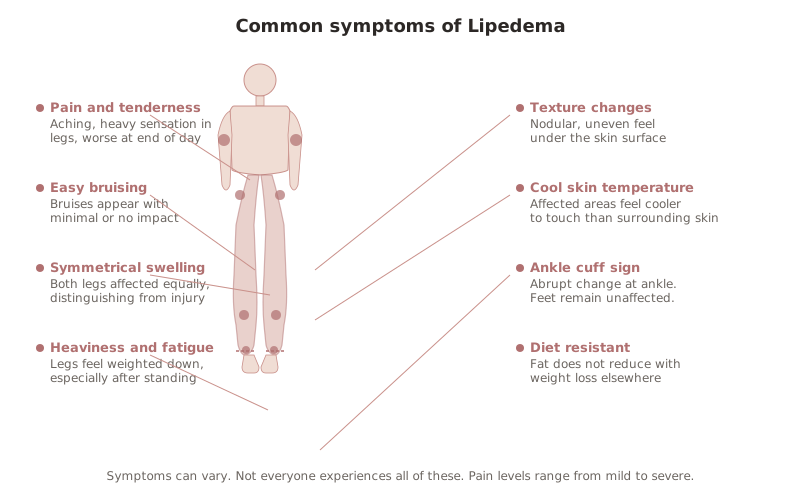
Lipedema causes symmetrical fat deposits on the legs and sometimes arms, tenderness and pain in the affected tissue, easy bruising, heaviness, fatigue, and a distinct cuff where the fat stops at the ankles and wrists. These symptoms are not caused by weight gain, and they do not resolve with dieting or exercise.
The physical symptoms of Lipedema follow a recognisable pattern, which is what makes the condition identifiable when a clinician knows what to look for. The fat accumulates symmetrically, always on both sides of the body at once. It builds up on the legs, hips, and buttocks, and in some women on the arms. It stops sharply at the ankles and wrists, creating a visible cuff. The hands and feet are not involved. This distribution is one of the clearest distinguishing features.
Pain is a central symptom, and it is important to name it clearly because it is often dismissed. The affected tissue is tender to palpation and can ache unprompted, especially at the end of the day. Women describe sensations ranging from a deep throb to surface-level sensitivity that makes even light touch uncomfortable. Easy bruising goes along with this: the tissue marks with minimal contact, which is thought to reflect fragility in the small blood vessels running through the abnormal fat. A 2024 national survey of more than 700 women with Lipedema confirmed pain, heaviness, and bruising as the most consistently reported experiences across the group.
Heaviness and fatigue are reported by most women with Lipedema. The legs feel dense and tired in a way that is disproportionate to activity levels. This is not ordinary end-of-day tiredness. It is a persistent heaviness that many women describe as exhausting to carry. Some also experience fluid fluctuations, where the legs feel more swollen in warm weather or after prolonged standing.
The diet resistance of Lipedema fat is one of the most important symptoms to understand, because it is the one most likely to be misread as a personal failing. The affected tissue does not respond to calorie restriction or increased exercise the way other fat does. Women may lose weight elsewhere in their bodies while the affected areas remain unchanged or even enlarge. This is not a lack of effort or willpower. It is a feature of how Lipedema fat is structured and regulated, and it has been confirmed across clinical literature.
There is also an emotional dimension to living with Lipedema that belongs in any honest account of its symptoms. Many women spend years being told that what they are experiencing is normal, or that it is the result of eating too much or moving too little. The psychological weight of that, of being dismissed and misunderstood, accumulates alongside the physical symptoms. It is not a separate problem. It is part of the condition’s impact, and it deserves to be taken seriously.
Evidence rating: Strong for the core symptom cluster. The symmetrical fat distribution, pain on palpation, easy bruising, diet resistance, and ankle cuff are consistently described across clinical guidelines including the 2021 US Standard of Care and are confirmed in large patient surveys. A 2024 national US survey of 707 women with a Lipedema phenotype found that pain, heaviness, and easy bruising were among the most commonly reported symptoms. The 2024 clinical review in PMC consolidates this picture across multiple study populations.
Evidence rating: Emerging for the precise mechanisms behind individual symptoms, particularly why the tissue is painful and why bruising occurs so readily. The relationship between fatigue and Lipedema is also underexplored in the research literature.
If you recognise these symptoms, especially the combination of symmetrical heaviness, tenderness, easy bruising, and fat that has not responded to diets you have tried, it is worth pursuing a formal assessment. Many women describe a long journey of being told their symptoms are normal or self-caused. They are not. A clinician who knows what Lipedema looks like can assess you properly. If your current doctor is not familiar with it, asking for a referral to a lymphoedema or vascular specialist is a reasonable next step.