Understand
Lipedema and lymphoedema sound similar and can look similar, but they are distinct conditions with different causes and different management.

Understand
Lipedema and lymphoedema sound similar and can look similar, but they are distinct conditions with different causes and different management.
Lipedema is a fat tissue disorder. Lymphoedema is a lymphatic drainage disorder. Both can cause swollen, heavy legs, but they have different patterns, different triggers, and different treatments. Getting the distinction right matters, because managing one as if it were the other does not work. The two conditions can also co-exist.
Lipedema and lymphoedema are both conditions that cause swelling and heaviness in the legs, and both are underdiagnosed in women. They are also regularly confused with each other, which is a problem because they have different underlying mechanisms and respond to different treatments. Being clear about what each one is, and what sets them apart, is one of the most practically useful pieces of knowledge anyone with leg swelling can have.
Lymphoedema is a condition of the lymphatic drainage system. When the lymphatic vessels are damaged, blocked, or develop abnormally, fluid builds up in the tissue rather than draining away. It can affect one limb or both, it tends to involve the hands and feet, and the swollen tissue typically pits when pressed: press a finger into the skin for a few seconds and a dent remains. The Stemmer sign is positive in lymphoedema, meaning you cannot pinch a fold of skin at the base of the second toe because the tissue is too thickened. Lymphoedema has known causes, including surgery, radiotherapy, cancer, infection, or in some cases a congenital lymphatic abnormality.
Lipedema, by contrast, is a fat tissue disorder. The swelling and heaviness come from the abnormal fat, not from lymphatic failure. It is almost always bilateral: both legs are affected at the same time and to roughly the same degree. The hands and feet are typically spared. The tissue does not pit on pressure, or does so only very slightly. The Stemmer sign is negative. And the affected tissue is painful in a way that lymphoedematous tissue is not.
The distinction matters in practice because some treatments overlap and others do not. Manual lymphatic drainage and compression garments are used in both conditions. But the diet resistance of Lipedema fat, the hormonal connection, and the consideration of surgical options such as liposuction are specific to Lipedema and are not part of lymphoedema management. Starting from the correct diagnosis means you are working toward the right goals.
The two conditions can exist together. When longstanding or advanced Lipedema places too great a burden on the lymphatic vessels in the affected area, secondary lymphoedema can develop on top of the Lipedema. This combination is called lipolymphoedema. It is more complex to manage than either condition alone, and it is one of the reasons early diagnosis and treatment of Lipedema is valuable.
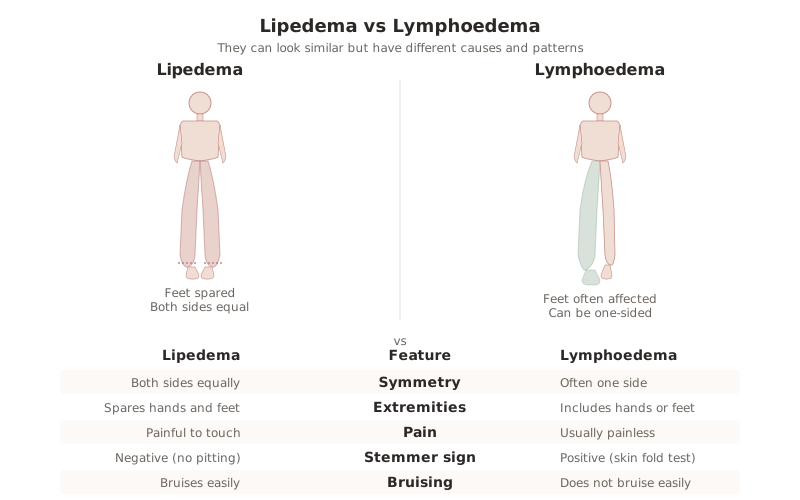
Evidence rating: Strong for the distinction between Lipedema and lymphoedema as separate conditions. The clinical criteria for each are well-documented across multiple authoritative sources, including the 2021 US Standard of Care, the 2024 German S2k guideline, and the NHS condition pages. A dedicated 2021 review concluded that lipoedema is not lymphoedema and outlined the distinguishing features in detail. A 2024 Cleveland Clinic Journal of Medicine paper provided an updated comparison. The Stemmer sign, bilateral symmetry, and sparing of the hands and feet are consistently cited as the key differentiating features across all sources.
If you have been diagnosed with lymphoedema but the diagnosis has never quite felt right, especially if both legs are affected equally, your hands and feet are unaffected, and the swelling does not pit when pressed, it may be worth asking for a second opinion from a clinician familiar with Lipedema. The two conditions do overlap, and lipolymphoedema is a real and recognised diagnosis. But starting from the right diagnosis means you and your care team are working with the right tools.