Understand
The staging and typing system for Lipedema helps describe the condition, but it does not define your future.

Understand
The staging and typing system for Lipedema helps describe the condition, but it does not define your future.
Lipedema is categorised by stage (how the tissue has changed) and by type (which parts of the body are affected). Most people are diagnosed at Stage 1 or 2, and progression is not inevitable. Knowing your stage and type helps you and your doctor choose the right management approach.
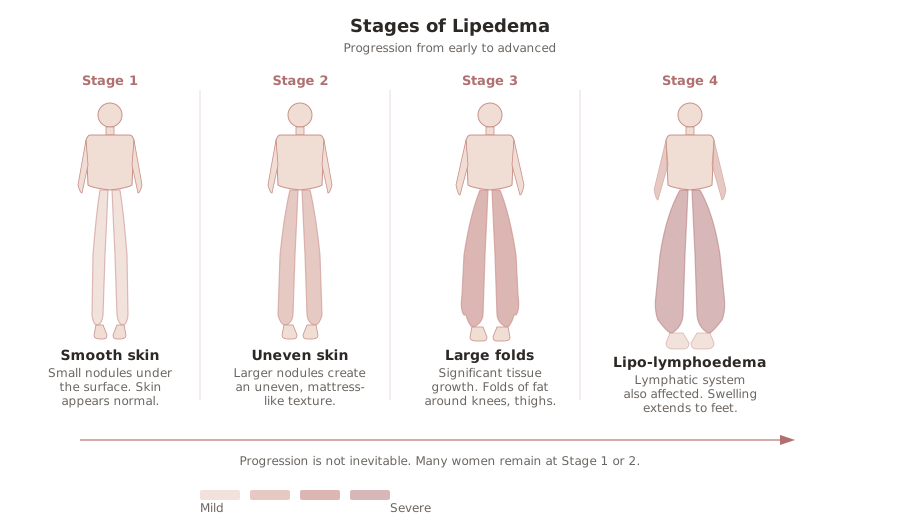
Lipedema is described using two overlapping systems: staging and typing. Staging describes how the tissue itself has changed over time. Typing describes which parts of the body are affected. Neither system tells the whole story on its own, but together they give clinicians and patients a shared language for planning care.
The most widely used staging system is the Wold classification, developed from clinical observation and referenced in both the 2021 US Standard of Care and the 2024 German S2k guideline. Stage 1 is characterised by skin that still feels smooth on the surface, with small nodules or pea-like structures in the fat underneath. Stage 2 brings visible changes to the skin surface, which becomes uneven or dimpled. The nodules grow larger. By Stage 3, large folds of tissue develop, the legs take on a column shape, and mobility may be affected. Some clinicians and researchers add a Stage 4 to describe lipolymphoedema, the combination of Lipedema with secondary lymphatic involvement.
The five types describe distribution rather than severity. Type 1 affects the hips, buttocks, and pelvis. Type 2 extends to the knees. Type 3 reaches the ankles. Type 4 affects the arms. Type 5 is limited to the lower legs. It is possible to have more than one type, and the most common presentation in clinical settings is Types 2 or 3.
It is worth knowing that these systems are still being refined. A 2024/2025 study proposed an updated staging model that takes into account pain intensity, water content in the tissue, fat volume, and skeletal muscle changes, areas the traditional model does not fully address. The Lipedema World Alliance Delphi Consensus (2024), which brought together international experts, acknowledged the limitations of existing classifications and called for more standardised diagnostic criteria. The field is moving, and what gets described as Stage 2 today may be described more precisely in the guidelines of tomorrow.
What matters most in practice is not the number attached to your condition but how you are feeling and how well your symptoms are being managed. Some people with Stage 3 Lipedema function well with a consistent conservative care routine. Some people at Stage 1 have significant pain that affects their daily life. Stage is a useful guide for treatment planning, particularly for surgical referrals, but it should always be read alongside the full picture of your symptoms and quality of life.
Evidence rating: Emerging for the staging and typing classifications. The Wold staging system has been in use for decades and is widely referenced in clinical guidelines, including the 2021 US Standard of Care and the 2024 German S2k guideline. The Lipedema World Alliance Delphi Consensus (2024) reflects broad clinical agreement on the framework. However, researchers are actively refining these categories. A 2024/2025 study proposed a revised staging model that incorporates pain, water content, fat volume, and skeletal muscle changes, which suggests the traditional system may not capture the full picture. Type classifications are similarly established in practice but not yet validated by large-scale studies.
Your stage and type are useful reference points, not a sentence. Many people with Stage 2 or 3 Lipedema manage their symptoms well with the right combination of conservative care and, where appropriate, surgery. If you have been told your Lipedema is at an advanced stage, that information matters for planning treatment, but it does not close off options. Talk to a specialist who understands the full range of what is available.